 Nihit Shahi
House Completion Certificate: Why You Can't Skip It
A completion certificate is an important part of the building approval process. Learn why it matters after construction, which documents may be requested and why you should confirm the exact requirements with your municipality before applying.
In Short
- The completion certificate confirms your house was built as approved and is safe to use.
- You may need it for bank loans, selling the property, insurance and other services.
- Building differently from approved drawings can make it hard or costly to get.
In This Article
What is a completion certificate?
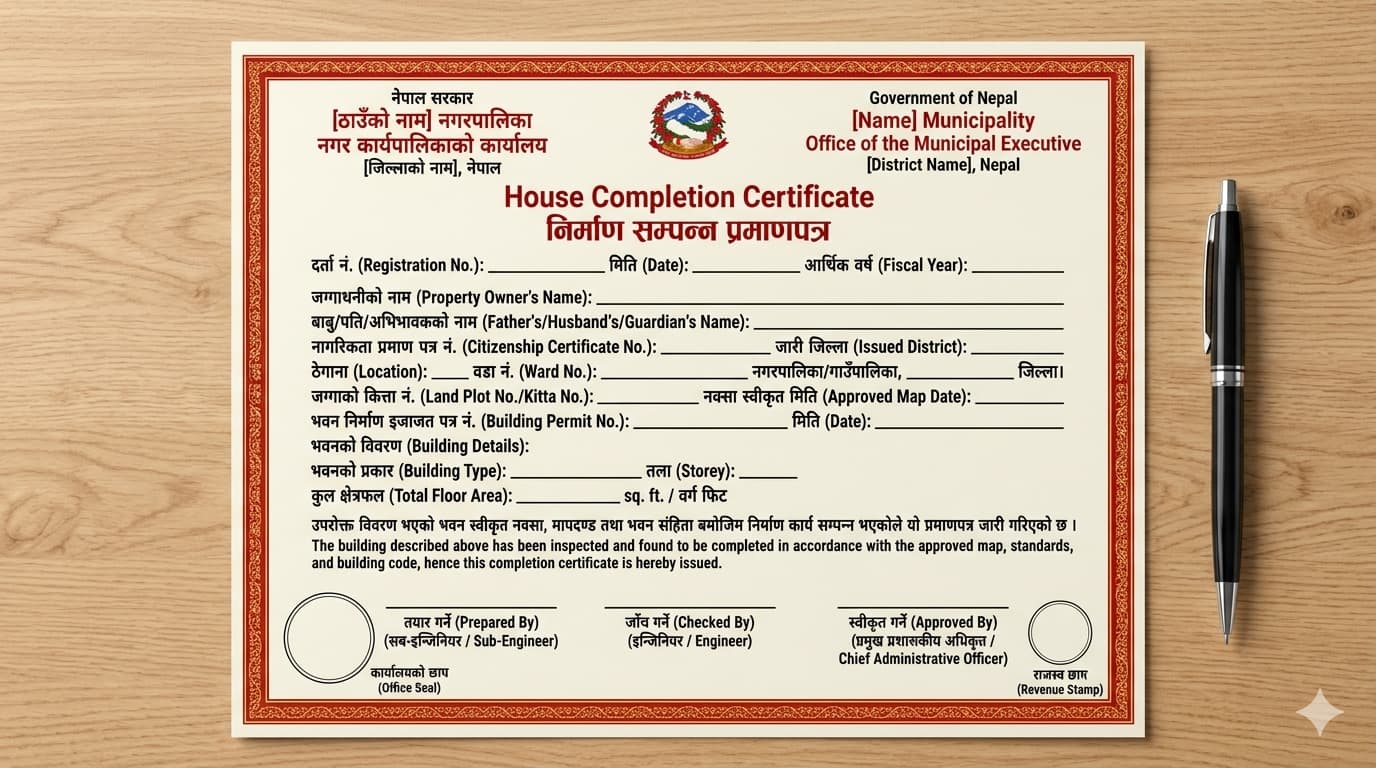
A completion certificate (in Nepali often called sampanna praman patra) is issued by the municipality after it checks that your finished house matches the approved naksha and building rules. It is the final piece of the legal process, after the naksha pass at the start.
Why you should not skip it
- Bank loans: banks may need it before releasing final loan installments or for future loans against the property.
- Selling: buyers and their banks often ask for it, and its absence lowers trust and value.
- Legal safety: it proves your house is recognised and not treated as unauthorised construction.
- Insurance and utilities: some services and claims may depend on proper approvals.
- Avoiding penalties: unapproved extra floors or area can attract fines.
How to get it
- 1
Build according to the approved drawing
Keep the approved naksha and any revision approvals safe and follow them on site.
- 2
Complete required inspections
Pass any stage inspections your municipality requires, for example at plinth or DPC level.
- 3
Prepare the documents
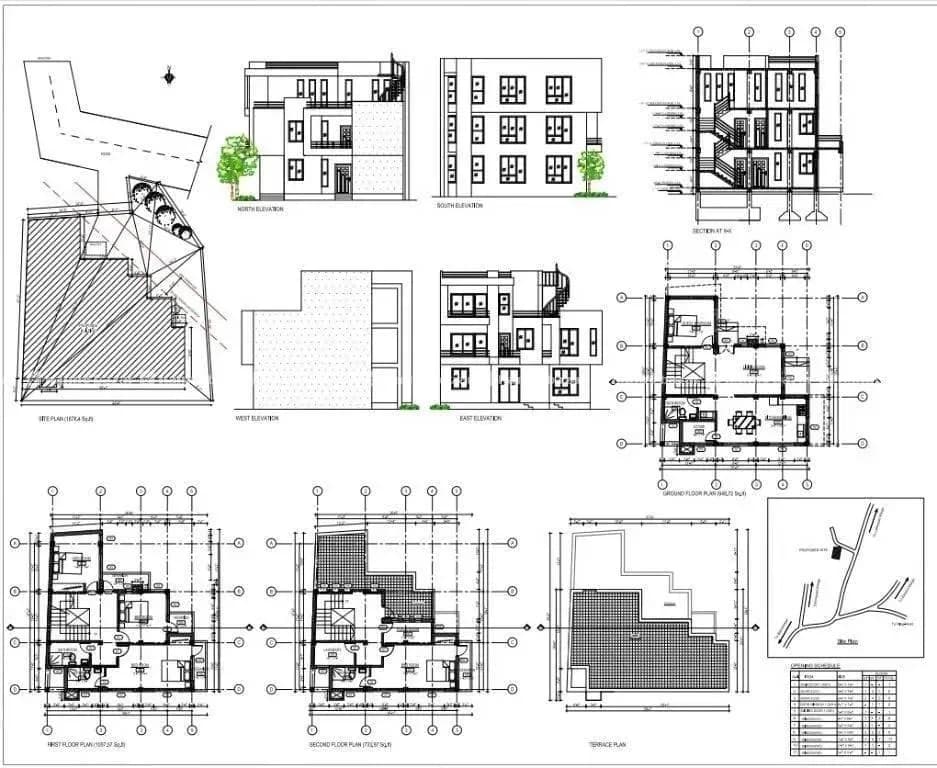
Usually the original permit and drawings, land papers, tax receipts, and the engineer's report or as-built drawings if required.
- 4
Apply at the municipality
Submit the application with required fees, either at the office or online if available.
- 5
Site verification
Officials visit to measure and compare the building with the approved plan.
- 6
Receive the certificate
If everything matches, the certificate is issued. If not, you may be asked to correct or regularise differences.
What if my building differs from the drawing?
Deviations create problems
Extra floors, bigger area, or changed setbacks can block approval or lead to penalties. Try to get revision approval before making major changes.
Old houses without certificate
Some municipalities offer regularisation for older buildings from time to time. Ask your ward or municipality what options and requirements apply.
Completion certificate checklist
- Approved naksha and any revision approvals
- Building matches the approved drawing
- Required inspection records
- Land ownership and tax documents
- Engineer's report or as-built drawing if required
- Application and fee receipt
Need help with Building Approval & Documentation?
Assistance with municipal permits and construction documentation. Explore the service or submit a booking request for your project.
Explore Building Approval & DocumentationImportant: This article is provided for general information and educational purposes. Construction costs, municipal procedures, approval requirements, timelines and technical requirements can vary by location and project. Always confirm current requirements with the relevant local authority and consult a qualified architect, engineer or other appropriate professional where necessary.