 Dipkiran Shrestha
Grey Structure vs Turnkey: Which Should You Choose?
Grey-structure and turnkey contracts offer different levels of scope, flexibility and owner involvement. Compare what is included, how finishing is managed and how payments are structured before deciding which approach fits your needs.
In Short
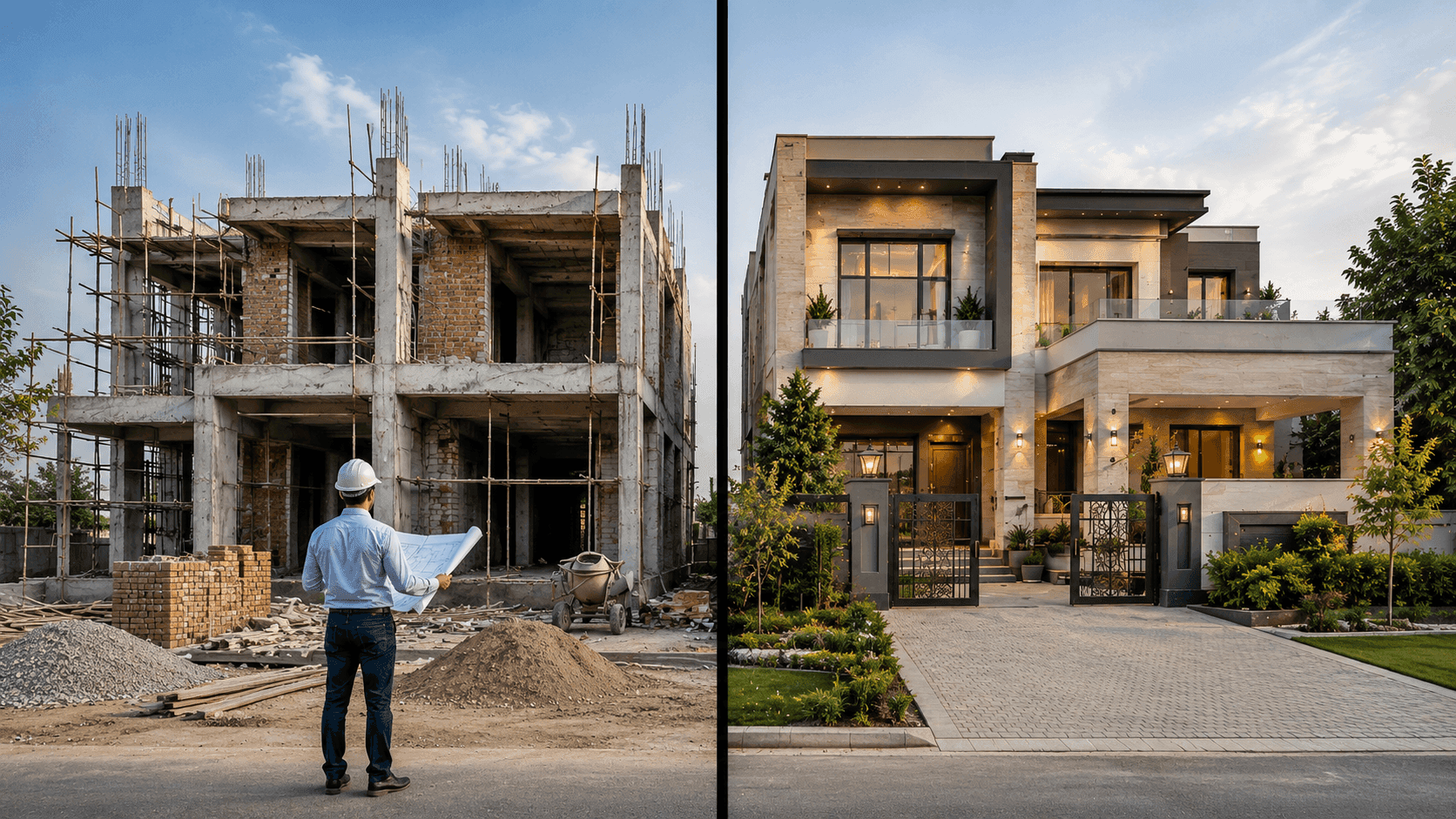
- Grey structure covers the building shell; turnkey covers everything up to a ready-to-live-in house.
- Grey structure gives more control and flexibility; turnkey gives convenience and single responsibility.
- Whichever you choose, get the exact inclusions written in the contract.
In This Article
What is grey structure?
Grey structure usually means the bare building: foundation, columns, beams, slabs, brick walls and often plaster and basic electrical and plumbing pipes. It does not include the final finishing, such as flooring, paint, doors, windows and fixtures. The exact list varies by contractor, so always ask for it in writing.
What is turnkey?
In a turnkey project, one company takes responsibility for the whole job: design, approval support, construction, finishing and handover. You receive a ready-to-use house, like receiving the keys to open the door and move in.
Side-by-side comparison
| Grey structure | Turnkey | |
|---|---|---|
| Scope | Shell of the building | Complete house, ready to live in |
| Your involvement | High: you choose and manage finishing | Lower: the contractor manages most decisions |
| Flexibility | High, you can pick different suppliers | Medium, depends on package and specs |
| Coordination | You coordinate finishing trades | One company coordinates everything |
| Cost control | Easy to spread cost over time | Clearer total cost upfront |
| Responsibility if something goes wrong | Split between different parties | Single point of responsibility |
Which one is right for you?
- Choose grey structure if you want to control finishing choices, spread spending over time, or already have trusted finishing workers.
- Choose turnkey if you live abroad, are busy, or want one team responsible for quality, time and cost.
- Consider a middle path: turnkey for structure and major services, with your own choice of tiles, paint and fixtures.
Define 'grey' and 'turnkey' in writing
Different companies use these words differently. Ask for a checklist of exactly what is included: plaster, waterproofing, wiring, pipes, tiles, paint, doors, windows, sanitary items and cleaning.
Ask your contractor
- What exactly is included in this package?
- Which brands and grades of materials will be used?
- What is excluded and priced separately?
- Who handles approvals, inspections and utility connections?
- What warranty or defect period is offered?
Need help with Civil Construction?
Civil construction work for different stages of a building project. Explore the service or submit a booking request for your project.
Explore Civil ConstructionImportant: This article is provided for general information and educational purposes. Construction costs, municipal procedures, approval requirements, timelines and technical requirements can vary by location and project. Always confirm current requirements with the relevant local authority and consult a qualified architect, engineer or other appropriate professional where necessary.