
 Aaryan Shrestha
Choosing Cement, Rebar and Bricks in Nepal
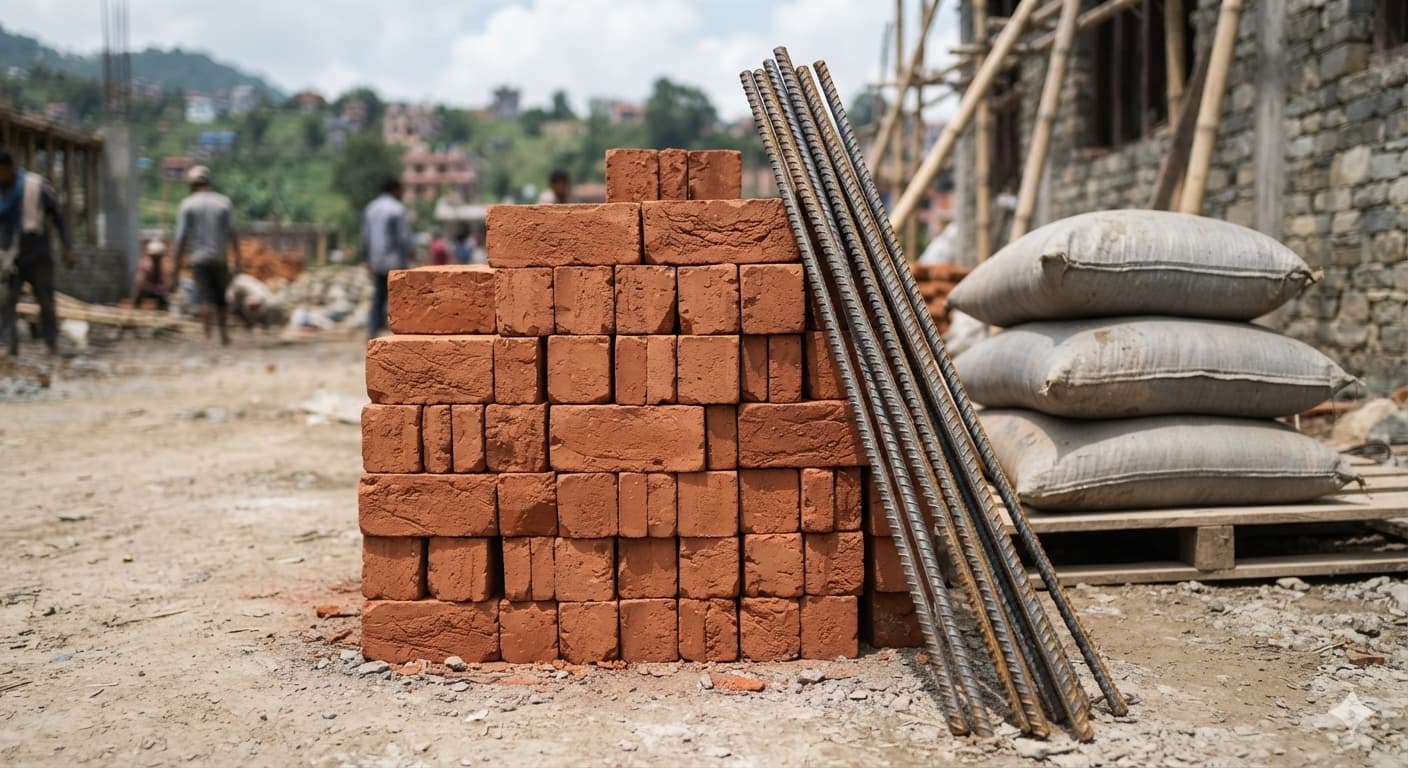
Construction materials should be selected against project specifications, recognised standards and professional advice. Learn what to ask suppliers, how to keep purchase records and why storage and handling can affect the quality of materials on site.
In Short
- Cement, steel and bricks decide the strength of your house: buy quality and check it.
- Look for standard marks, fresh stock, and proof of strength such as test results.
- Save money on decoration, not on structural materials.
In This Article
Cement
- Buy from a reliable dealer and check the manufacturing date, since old cement loses strength.
- Bags should be sealed, dry and free of hard lumps.
- Store bags on a raised platform in a dry place, away from walls and rain.
- Ask your engineer whether OPC or PPC cement is right for each part of your building.
Steel reinforcement (rebar)
- Use the grade shown in the structural drawing, commonly high-strength deformed bars such as Fe500 or better.
- Look for clear manufacturer marking and a quality mark on the bars.
- Bars should be free of loose, flaky rust and be straight and uniform.
- Ask for the manufacturer's test certificate for large purchases.
Thickness must match the drawing
A bar that is even slightly thinner than the drawing calls for has much less strength. Check diameters on delivery.
Bricks, sand and aggregate
- Bricks should have uniform size, sharp edges and a clear ringing sound when two are tapped together.
- Avoid over-burnt, cracked or very crumbly bricks.
- Soak bricks in water before use so they do not draw water from the mortar.
- Sand should be clean with little silt or clay. Aggregate should be clean and well graded.
Quick quality checks
| Material | What to check | Useful test or proof |
|---|---|---|
| Cement | Fresh, dry, no lumps | Manufacturing date, brand and storage |
| Rebar | Correct grade and diameter, low rust | Test certificate, weight and diameter check |
| Bricks | Uniform, strong, ring sound | Crushing strength and water absorption tests |
| Sand and aggregate | Clean, low silt | Simple silt test and visual check |
| Concrete | Correct mix and strength | Cube test at 28 days |
Get concrete cubes tested
Casting a few concrete cubes on site and testing them at a lab is a low-cost way to confirm your concrete has the required strength.
Where you can save and where you should not
- Never compromise on: steel, cement, concrete quality, waterproofing and electrical wiring.
- Can be flexible on: tile brand, paint brand, fixtures, decorative finishes and furniture.
Need help with Materials Supply?
Sourcing and delivery coordination for construction materials. Explore the service or submit a booking request for your project.
Explore Materials SupplyImportant: This article is provided for general information and educational purposes. Construction costs, municipal procedures, approval requirements, timelines and technical requirements can vary by location and project. Always confirm current requirements with the relevant local authority and consult a qualified architect, engineer or other appropriate professional where necessary.