 Aaryan Shrestha
Budgeting Your Construction Project
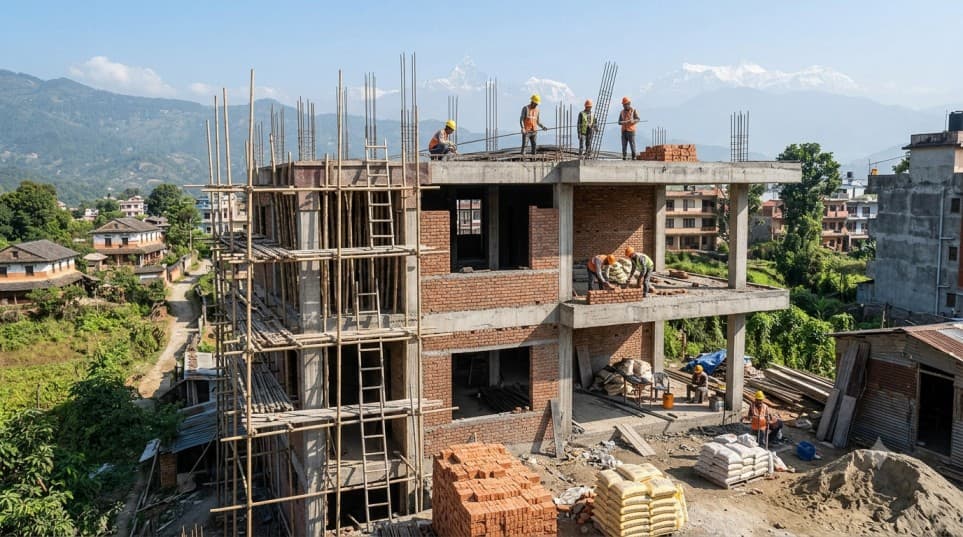
A realistic construction budget includes more than the main contractor's quotation. Learn how to organise estimates for materials, labour, approvals, utilities, finishing and a contingency so you can compare proposals and prepare for costs that may otherwise be overlooked.

In Short
- Structure usually takes the biggest share, but finishing is where budgets often blow up.
- Keep 10-15% aside as a contingency fund.
- Count non-construction costs too: approvals, soil test, boundary wall, septic tank and connections.
In This Article
Where the money actually goes
Every project is different, but the table below gives a rough idea of how a typical residential budget is spread. Use it as a starting point and ask your contractor or engineer for a proper BOQ.
| Item | Rough share of budget |
|---|---|
| Structure (foundation, columns, slabs, walls) | 40-50% |
| Finishing (plaster, paint, flooring, doors, windows) | 25-35% |
| Electrical and plumbing | 10-15% |
| Design, approval and supervision | 3-6% |
| Contingency | 10-15% |
Costs many people forget
- Naksha drawing, structural design and municipality fees
- Soil testing and land levelling
- Boundary wall and gate
- Septic tank or sewer connection, and underground water tank
- Electricity, water and internet connections
- Rent for the place you live in while the house is being built
- Furniture, curtains, appliances and shifting
Prices change
Cement, steel and labour prices move during a project. Ask how price changes will be handled in your contract so you are not surprised halfway through.
How to plan your budget step by step
- 1
Decide your total limit
Include your savings, loan amount and any family support. Be honest about what you can spend without stress.
- 2
Split it by stage
Divide the total into design, structure, finishing and extras so you can track each stage.
- 3
Get a detailed BOQ
A bill of quantities lists every material and work item with quantities and rates. This is the base for all cost control.
- 4
Add a contingency
Keep 10-15% aside for price increases and surprises. If you do not need it, that is a bonus.
- 5
Track spending monthly
Compare what you paid against the plan. Small overspends found early are easy to fix.
Smart ways to save without weakening the house
- Finalise the design before starting. Changes after slab casting are the most expensive.
- Prefer simple shapes and standard room sizes over complicated designs.
- Buy bulk materials early if you have safe storage, especially when prices are stable.
- Compromise on finishing items you can upgrade later, never on structure, steel or concrete quality.
Need help with Project Management?
Project coordination and scheduling to help keep construction organized. Explore the service or submit a booking request for your project.
Explore Project ManagementImportant: This article is provided for general information and educational purposes. Construction costs, municipal procedures, approval requirements, timelines and technical requirements can vary by location and project. Always confirm current requirements with the relevant local authority and consult a qualified architect, engineer or other appropriate professional where necessary.